PORT OF MIAMI GUIDE

Miami Cruise Port & Terminals Guide
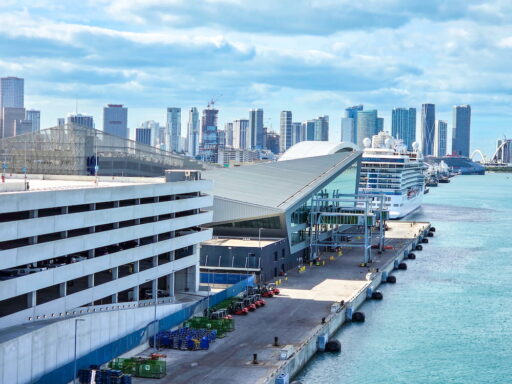 Miami Cruise Port (PortMiami) is one of the busiest cruise ports in the world and the primary gateway for millions of cruise passengers each year.
With multiple terminals, frequent sailings, and close proximity to Downtown Miami, understanding how the port works can make a significant difference on embarkation and disembarkation day.
This guide focuses on how PortMiami operates in practice; including cruise terminals, access routes, transportation options, and what cruise travelers should expect on arrival and departure day. Rather than listing hotels or attractions in detail, this page is designed to help you navigate the port itself with confidence.
If you’re planning a cruise from Miami, this page will help you understand:
- where cruise terminals are located
- how to get to the port efficiently
- what to expect on embarkation morning
- how PortMiami fits into your overall cruise itinerary
For accommodation, parking, and sightseeing near the port, we cover these topics in separate, dedicated guides such as where to stay in Miami before a cruise and Port of Miami parking options.
Overview of the Port of Miami (PortMiami)
PortMiami, commonly known as the Port of Miami, is one of the largest and most advanced cruise ports in the world. Located on Dodge Island just east of Downtown Miami, the port serves as a homeport for many of the world’s major cruise lines and handles millions of cruise passengers each year.
The port features multiple dedicated cruise terminals, each designed to support efficient embarkation and disembarkation. Terminals are connected by clearly marked access roads and are easily reached by taxi, rideshare, shuttle services, or private vehicles.
Miami Cruise Terminals
PortMiami is home to multiple modern cruise terminals, each assigned to specific cruise lines. The terminals are designed for efficient embarkation and disembarkation, with clearly signposted access roads, passenger drop-off zones, and nearby parking facilities.
Several terminals have been newly built or recently renovated to accommodate the world’s largest cruise ships. Because terminal assignments can change, passengers should always confirm their departure terminal directly with their cruise line shortly before arrival.
Below is an overview of the current cruise terminals at the Port of Miami and the cruise lines they typically serve:
Miami has several cruise terminals and they are:
- Terminal AA/AAA – MSC Cruises
- Terminal A – Royal Caribbean (often referred to as The Crown of Miami)
- Terminal B – Norwegian Cruise Line (The Pearl of Miami)
- Terminal C – Norwegian Cruise Line / select Disney sailings
- Terminals D & E – Carnival Cruise Line, Princess Cruises, Holland America Line
- Terminal F – Carnival Cruise Line
- Terminal G – Royal Caribbean, Celebrity Cruises (future redevelopment planned)
- Terminal J – Luxury and small-ship cruises (Oceania Cruises, Regent Seven Seas)
- Terminal V – Virgin Voyages
- Terminal K – Disney Cruise Line (new terminal, opening in phases)
Tip: Terminal locations are clearly marked throughout the port, but always verify your assigned terminal shortly before travel, as changes can occur.
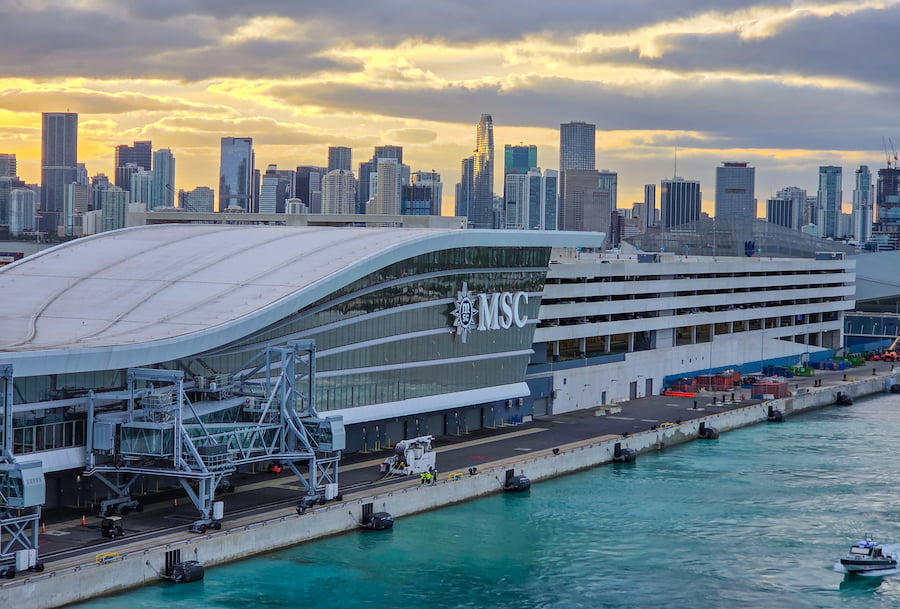
Practical Terminal Tips for Cruise Passengers
Terminal assignments can change
Cruise terminal assignments at PortMiami may vary by sailing date and ship. Always confirm your assigned terminal with your cruise line shortly before departure.
Arrival flow is similar across terminals
Most terminals follow a similar flow: curbside drop-off → luggage drop → security screening → check-in → waiting area. Signage is clear, but traffic congestion outside terminals can vary.
Some terminals are busier than others
Terminals serving the largest ships (such as Terminal A and Terminal AA) can feel more crowded during peak embarkation windows. Arriving earlier in the day often results in a smoother experience.
Parking and drop-off differ by terminal
Each terminal has its own drop-off lanes and nearby parking facilities. Following overhead signage is more reliable than GPS once you enter Dodge Island.
Official PortMiami Terminal Map
For the most up-to-date terminal layouts and access routes, consult the official PortMiami terminal map provided by Miami-Dade County.
Getting to Miami Cruise Port
PortMiami is located just across Biscayne Bay from Downtown Miami and is easily accessible by car, taxi, ride-share, and public transportation. The port is well signposted and connected to major highways, making arrival straightforward for cruise passengers.
Driving
Drivers can use the following address for GPS navigation:
PortMiami – 1015 North America Way, Miami, FL 33132
Clearly marked signs guide vehicles to the appropriate cruise terminals and on-site parking facilities. Access roads connect directly to Interstate 95, I-395, and the PortMiami Tunnel.
From Miami International Airport (MIA)
Miami International Airport is approximately 7 miles (11 km) from PortMiami.
Typical travel time ranges from 15 to 25 minutes, depending on traffic.
The most direct route is via the PortMiami Tunnel, which avoids Downtown traffic and provides direct access to the cruise terminals.
From Fort Lauderdale–Hollywood International Airport (FLL)
Fort Lauderdale–Hollywood International Airport (FLL) is located approximately 30 miles north of the Port of Miami. Travel time typically ranges from 45 to 75 minutes, depending on traffic conditions.
Cruise passengers can reach PortMiami from FLL by taxi, ride-share services such as Uber or Lyft, private transfers, or cruise line–organized transportation. While cruise line transfers offer coordination with sailing schedules, they are usually charged per person and may be less cost-effective for families or groups.
Ride-share services and private transfers are often preferred for their flexibility and direct routing. Public transportation between FLL and PortMiami is possible but involves multiple transfers and is generally not practical for travelers with luggage.
Cruiser Tip:
For most travelers flying into Fort Lauderdale for a Miami cruise, Uber/Lyft or a pre-booked private transfer provides the best balance between time, cost, and convenience.
Transportation Options on Cruise Day
Cruise line transfers
Many cruise passengers arrive in Miami by air, and most cruise lines offer airport-to-port transfer services on embarkation day. These transfers must be booked in advance directly through the cruise line and are typically charged per person.
Transfers usually operate only on the day of embarkation or disembarkation, which makes them less suitable for travelers arriving a day early, something strongly recommended for most cruises.
Compared to taxis or ride-share services, cruise line transfers are generally more expensive per person, especially for couples or families. For this reason, many passengers choose taxi, Uber, or Lyft as a more flexible and cost-effective alternative.
Travelers who specifically want a hotel that offers organized transportation can also compare hotels with cruise shuttle service in Miami.
Taxi – Uber/Lyft
Taxis and ride-share services such as Uber and Lyft are widely available throughout Miami and at both airports. Fixed taxi rates between the airport and the cruise port are no longer in place, and fares now vary based on traffic and demand.
From Miami International Airport, taxi fares typically fall in the mid-range, while Uber and Lyft often provide more flexible pricing depending on time of day and vehicle type. Ride-share services are usually the most cost-effective option for small groups, as fares are charged per vehicle rather than per person.
Prices can increase during peak cruise mornings, special events, or heavy traffic, so allowing extra time and checking rates shortly before travel is recommended.

Public Transportation to Port of Miami
Public transportation is available in Miami, but it is less convenient for cruise passengers traveling with luggage.
Passengers can use Metrorail and Metromover services within Downtown Miami, although a short taxi or ride-share is usually still required to reach the cruise terminals. The Go Miami-Dade Transit app can help plan routes by bus, train, or Metromover.
Regional train services also connect Miami with other cities in Florida and beyond. Brightline provides fast rail connections to Fort Lauderdale, West Palm Beach, and Orlando, while Amtrak operates long-distance services along the U.S. East Coast. Both arrive in Downtown Miami, requiring onward transport to PortMiami.
For most cruise travelers, public transportation is best suited for light luggage or budget-focused trips. Taxis and ride-share services remain the most practical option for reaching the cruise terminals.
Private Transportation to Miami Cruise Port
Private transfer services are available for passengers seeking door-to-door transport between airports, hotels, and cruise terminals. These services offer scheduled pickup times and direct drop-off at the assigned terminal.
From our experience:
We’ve used the Port of Miami multiple times across different sailings, and the experience can vary depending on timing and terminal. Early morning arrivals tend to be smoother, while mid-morning traffic around Downtown and the port can slow things down quickly.
Signage to the terminals is generally clear, but allowing extra buffer time – especially on weekends – makes embarkation far less stressful.
Arriving Early or Disembarking Late
Many cruise passengers arrive in Miami a day before their cruise or remain in the city after disembarkation. Planning these extra hours carefully can make the start or end of your cruise significantly smoother.
Arriving Early (Before Embarkation Day)
Arriving in Miami at least one day before your cruise departure is strongly recommended, especially for travelers flying in from another city or country. Weather delays, flight cancellations, or traffic issues can all impact same-day arrivals.
Passengers arriving early benefit from:
- Reduced stress on embarkation morning
- Flexibility in case of flight delays
- Time to adjust after long-haul or international flights
Early arrivals often use the extra time to explore Downtown Miami, Miami Beach, or simply rest before cruise day. On embarkation morning, reaching the port from most central areas typically takes only a short taxi or ride-share ride.
Disembarking Late or Staying After the Cruise
After a cruise, ships usually begin disembarkation early in the morning, but onward travel plans may not align with these schedules. Travelers with late flights or additional nights in Miami should plan accordingly.
Common post-cruise considerations include:
- Luggage handling after disembarkation
- Transportation from the cruise terminal to hotels or the airport
- Waiting time before hotel check-in or flights
Some passengers choose to book a hotel near the port or airport for the night after their cruise, while others explore Miami before heading home later in the day.
Practical Tip for Cruise Travelers
From our experience, having a flexible plan for arrival or departure days makes a noticeable difference. Arriving early allows you to start your cruise relaxed, while planning ahead for late departures helps avoid unnecessary waiting or last-minute stress after disembarkation.
Cruise passengers arriving a day early often choose hotels close to the terminals; see our guide to hotels near the Port of Miami for location-based options.
Port of Miami Location & Surroundings
PortMiami is located on Dodge Island, directly east of Downtown Miami and just across Biscayne Bay from the city center. Its central location places cruise passengers within minutes of key Miami neighborhoods, making the port easily accessible before and after a cruise.
The areas surrounding the port include Downtown Miami, Bayside Marketplace, Bayfront Park, and the Miami River waterfront. These locations are commonly used by cruise passengers for short walks, dining, last-minute shopping, or simply spending time near the water before embarkation or after disembarkation.
Because of the port’s proximity to Downtown, many cruise travelers combine their cruise with time in the city. Restaurants, shopping centers, waterfront promenades, and public transport options are all nearby, allowing passengers to explore without long travel times.
While there are plenty of things to see and do close to the port, most cruise passengers use this area primarily for convenience rather than sightseeing. For those planning extra time in Miami, nearby neighborhoods such as Brickell, Miami Beach, and Wynwood offer a wider range of attractions and experiences.
Best Time to Visit and Cruise from Miami?
Miami offers year-round cruise departures, but travel conditions can vary depending on season, weather, and passenger volume. Peak cruise season typically runs from late fall through spring, when demand is highest and the port is at its busiest.
Summer and early fall bring warmer temperatures and lower crowds, but also higher humidity and the possibility of tropical weather. Cruise operations continue throughout the year, though embarkation days during peak periods can feel noticeably busier at the port.
For a detailed breakdown of seasons, weather patterns, and the best times to cruise from Miami, see our complete guide on the best time to visit Miami for a cruise.
👉 For a detailed breakdown by season, weather patterns, and cruise demand, see our complete guide to the best time to cruise from Miami.
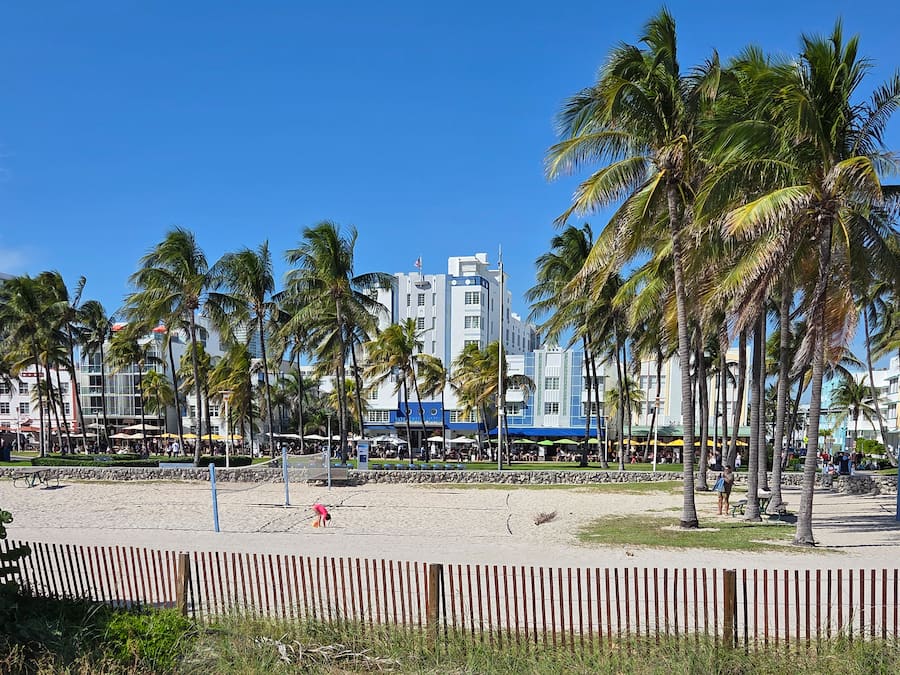
Getting Around Miami (Practical Overview)
Getting around Miami is relatively straightforward, but the best transportation option depends on where you’re staying and how much time you have before or after your cruise.
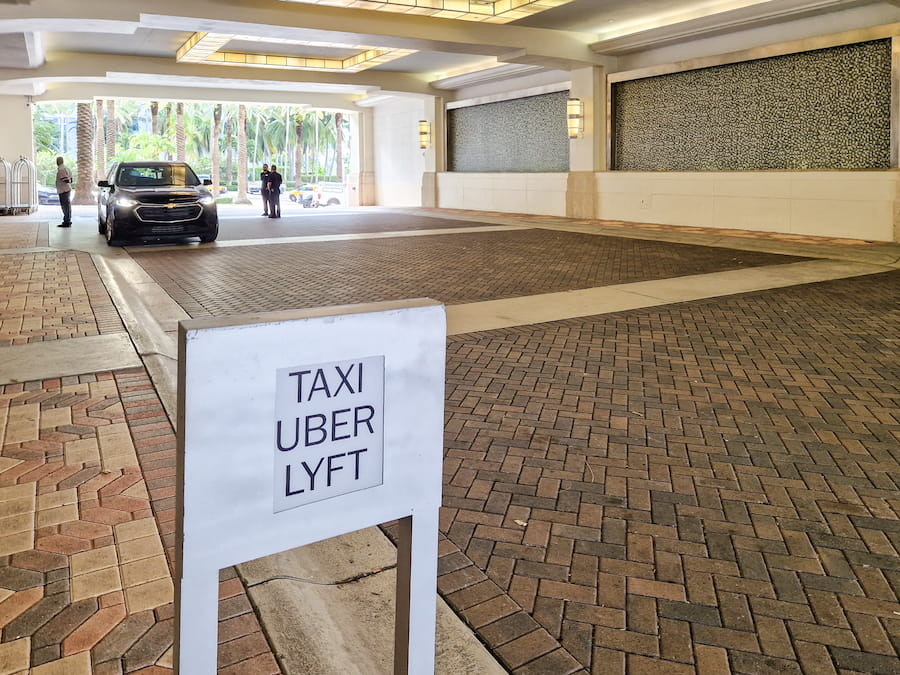
For most cruise passengers, Uber, Lyft, or taxis are the most convenient way to travel between hotels, airports, and the Port of Miami. These services are widely available, operate 24/7, and offer flexibility without the need to navigate traffic or parking.
Rental cars can be useful for travelers planning to explore Miami beyond the cruise, but they are less practical for short pre-cruise stays due to parking costs and traffic, especially in Downtown and Miami Beach.
Public transportation options such as Metrorail, Metromover, and buses can work for light luggage and short distances, particularly within Downtown Miami. However, public transit is generally less convenient for cruise passengers traveling with suitcases.
For most cruise travelers, ride-share services offer the best balance between cost, convenience, and flexibility when getting around Miami before or after a cruise.
Practical Cruise Day Tips for PortMiami
Embarkation day at the Port of Miami usually runs smoothly, but timing and preparation can make a noticeable difference, especially during busy cruise periods.
Plan extra buffer time
Even though PortMiami is well organized, traffic around Downtown Miami and the port access roads can build up quickly, particularly between 9:00 and 11:30 AM. Arriving earlier than strictly necessary helps reduce stress, especially for families or travelers with luggage.
Expect heavier traffic on weekends
Most cruises depart on Fridays, Saturdays, and Sundays. Weekend sailings typically mean higher passenger volumes, more traffic near the port, and longer drop-off lines. Weekday departures are generally quieter and easier to navigate.
Follow port signage carefully
Once you approach Dodge Island, signage to the cruise terminals is clear and well marked. However, terminal assignments can change, so always confirm your terminal with your cruise line before leaving your hotel or airport.
Allow extra time during peak season
During peak cruise season (roughly December through April), embarkation mornings feel busier across the port. Holiday sailings and school vacation periods can also increase congestion, even if your cruise line is usually efficient.
Transportation choice matters
Taxis and ride-share services work well for most passengers, but allow extra time if you’re using shared shuttles or third-party transfers, as these often operate on fixed schedules and may stop at multiple terminals.
From our experience:
Early arrivals tend to move through the port more smoothly, while mid-morning congestion can slow things down quickly. Allowing extra buffer time, especially on weekends or during peak season, makes embarkation far less stressful and helps you start your cruise relaxed.
Frequently Asked Questions About the Port of Miami
Most cruise lines recommend arriving at the Port of Miami within your assigned embarkation window, which usually starts around late morning. In practice, arriving 30–60 minutes earlier than your check-in time provides a comfortable buffer, especially during busy periods or weekend sailings.
Yes. The Port of Miami is well signposted, with clearly marked access roads and terminal drop-off areas. Once on Dodge Island, directional signs guide drivers to each cruise terminal. Navigation is generally straightforward, though traffic can slow things down during peak hours.
It’s possible, but not recommended. Same-day arrivals leave little room for flight delays, traffic, or weather disruptions. Most experienced cruise travelers choose to arrive in Miami at least one day early to reduce stress and avoid the risk of missing their cruise.
Miami International Airport (MIA) is the most convenient option, located about 15–25 minutes from the cruise terminals. Fort Lauderdale–Hollywood International Airport (FLL) is also commonly used, but it requires a longer transfer of approximately 35–50 minutes to the Port of Miami.
Yes. Fridays, Saturdays, and Sundays are typically the busiest days at the Port of Miami, as many cruises depart over the weekend. Expect heavier traffic, longer drop-off lines, and a more crowded terminal experience compared to weekday departures.
Please contact us if any information is incorrect or not up-to-date.
Related guides to Port of Miami in Florida
