PORT OF TAMPA GUIDE

Guide to the Tampa Cruise Port: Terminals, Access & What to Expect
 Tampa is one of Florida’s more compact cruise ports, but it doesn’t operate like Miami or Port Canaveral.
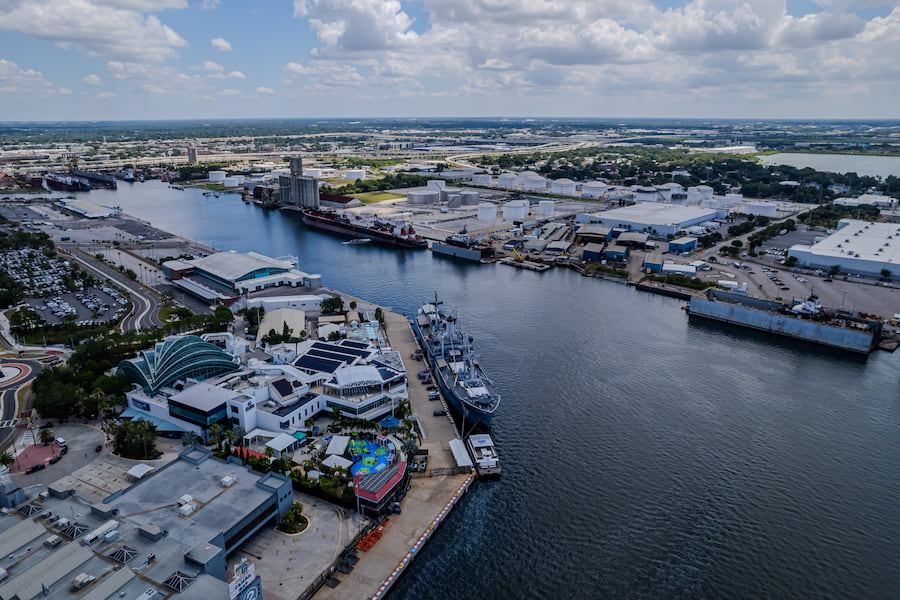
The terminals sit directly beside downtown, ships pass under the Sunshine Skyway Bridge, and embarkation mornings usually feel organized rather than overwhelming.
Still, timing, terminal assignment, and parking decisions can noticeably influence how relaxed your departure day feels.
Because of bridge clearance limits, Tampa handles fewer ultra-large ships than other Florida ports. That keeps the footprint manageable, but when multiple ships sail on the same day, traffic into the Channelside area can still build quickly between late morning and early afternoon.
This guide focuses on practical planning: terminal layout, parking logistics, realistic traffic expectations, and the small details that first-time Tampa cruisers often overlook.
For hotel comparisons and shuttle options, see our dedicated Tampa accommodation guide.
Tampa Cruise Terminals
Port Tampa Bay operates three main cruise terminals: Terminal 2, Terminal 3, and Terminal 6.
All three are located along Channelside Drive near downtown Tampa. The port layout is compact compared to Miami, and parking garages are positioned directly beside the terminals.
Unlike some Florida ports where each cruise line has a fixed building, terminal assignments in Tampa can rotate depending on ship size and daily schedule. Always confirm your exact terminal in your cruise documents a few days before departure.
1. Terminal 2
Terminal 2 is frequently used by:
- Royal Caribbean
- Norwegian Cruise Line (NCL)
- Celebrity Cruises
Royal Caribbean sailings from Tampa most commonly operate from Terminal 2, but ships can be reassigned depending on how many vessels are in port that day. Royal Caribbean ships sailing from Tampa are generally smaller or mid-sized vessels due to height restrictions under the Sunshine Skyway Bridge, a unique characteristic of this port.
Address:
651 Channelside Drive
Because parking is immediately adjacent, this terminal is straightforward for drive-in passengers. Traffic flow is generally organized, but can slow during peak embarkation windows when multiple ships are in port.
2. Terminal 3 (Primarily Carnival Cruise Line)
Terminal 3 is most often associated with:
- Carnival Cruise Line
- Celebrity Cruises (sometimes)
- Norwegian Cruise Line (occasionally)
Carnival Tampa departures are frequently routed through Terminal 3, but as with all Tampa terminals, this can change based on the sailing schedule. If you’re searching for “Carnival cruise port Tampa” or “Tampa Carnival cruise terminal,” this is usually the terminal involved.
Address:
815 Channelside Drive
Parking is located directly opposite the terminal entrance.
3. Terminal 6
Terminal 6 commonly serves:
- Margaritaville at Sea
- Norwegian Cruise Line (on certain sailings)
- Royal Caribbean (depending on port congestion)
Address:
1333 McKay Street
Terminal 6 provides slightly quicker access from the downtown side of the port.
Why Tampa Terminal Assignments Change
Tampa does not operate like Miami, where each cruise line has a fixed, dedicated mega-terminal.
Instead, assignments depend on:
- Number of ships in port that day
- Ship size
- Operational scheduling
- Seasonal deployment
This flexibility keeps the port efficient, but it also means you should never rely on last year’s terminal information.

Getting to the Tampa Cruise Port
There are different ways to access the Tampa Port Cruise Terminals, depending on your means of transport. Here is a quick guide.
ampa is one of the easier Florida cruise ports to reach, especially compared to Miami or Port Canaveral.
The terminals sit directly next to downtown in the Channel District. That means access roads are straightforward, distances are short, and navigation is rarely confusing if you enter the correct terminal address.
From Tampa International Airport (TPA)
Tampa International Airport is about 9–10 miles from the port.
Travel time is typically 15–20 minutes, depending on traffic.
Most cruise passengers use:
- Uber or Lyft
- Taxi
- Hotel-arranged transport (less common)
Because distances are short, ride-share is usually the simplest option. Unlike Miami, you’re not crossing bridges or dealing with dense urban congestion.
From Downtown Hotels
If you’re staying in the Channel District, some hotels are genuinely walkable to the terminals. Sidewalks are wide, the area is flat, and crossings are simple.
For many cruise travelers, walking from a nearby hotel is easier than waiting for a scheduled shuttle.
Driving to the Port
If you’re driving in from within Florida, access is direct via I-275 or I-4. Signage toward Port Tampa Bay is clear once you approach downtown.
The key detail:
Enter the exact terminal address in your GPS. Do not just enter “Port Tampa Bay,” as that may lead you to a different gate.
Choosing the right area can significantly affect transfer time on embarkation morning. Our Tampa neighborhood cruise guide breaks down the differences between downtown, Ybor, and airport stays.
Port of Tampa Parking
Parking at Port Tampa Bay is generally more straightforward than at larger Florida ports.
Each terminal has adjacent or very close parking garages. Walking distances from garage to terminal are short, and the layout is compact.
Official Port Parking
Port Tampa Bay operates on-site parking garages directly next to:
- Terminal 2
- Terminal 3
- Terminal 6
Parking is charged per day. Rates can change, so always verify on the official Port Tampa Bay website before departure.
What makes Tampa easier than some other ports:
- No remote lots for most passengers
- No long shuttle transfers from off-site parking
- Short walking distances to terminal entrances
For many cruisers, especially those on shorter sailings, parking at the port is the simplest option.
When Hotel Parking Makes Sense
Hotel cruise parking packages can work well if:
- You’re driving in the night before
- The hotel offers a competitive long-term rate
- Shuttle timing aligns with your embarkation window
However, because the port garages are so close to the terminals, the price difference between hotel parking and official port parking isn’t always dramatic.
In Tampa, convenience often outweighs small savings.
For some travelers, parking directly at the port avoids waiting for hotel shuttles or coordinating morning transfer schedules.
Embarkation Day: What to Expect in Tampa

Embarkation in Tampa is usually calmer than in Miami, but that doesn’t mean you can ignore timing.
Because the terminals sit right next to downtown and parking garages are adjacent to the buildings, the process feels compact and organized. Still, most passengers tend to arrive within the same window, and that’s where minor delays build.
Arrival Timing
The busiest arrival period is typically between 10:30 a.m. and 12:30 p.m.
If multiple ships sail on the same day, traffic can slow around the Channelside area, especially near terminal entrances and garage ramps. It’s rarely chaotic, but lines can form.
Arriving either:
- slightly before 10:30 a.m., or
- after the first peak wave (closer to 1:00 p.m.)
usually makes the experience smoother.
Traffic Flow and Drop-Off
Tampa operates with controlled vehicle flow. Port staff and police direct cars into:
- Passenger drop-off lanes
- Garage entrances
- Rideshare zones
Unlike larger ports, distances are short. Even if traffic slows, you’re rarely stuck far from the terminal.
Important:
Each terminal has its own access point. Entering the wrong one means looping back around downtown streets, which adds unnecessary stress.
Luggage and Check-In
Porters are positioned curbside at each terminal. If you’re parking in the adjacent garage, you can either:
- Drop luggage first, then park
- Park first, then walk luggage over (distances are short)
Security and check-in areas are clearly marked inside the terminal buildings. Because Tampa handles fewer mega-ships simultaneously than Miami, interior congestion is usually manageable.
What People Underestimate
From experience, cruise travelers often underestimate:
- How quickly the 10:30–12:00 window fills up
- The importance of confirming the correct terminal in advance
- The small but noticeable slowdown when two ships embark at once
Tampa is efficient, but it still benefits from basic planning.
Arrive with your terminal confirmed, allow buffer time, and avoid assuming that “smaller port” means “no lines.”
Common Planning Mistakes at the Tampa Cruise Port
Tampa is one of Florida’s easier cruise ports to navigate, but the problems that do happen are almost always avoidable.
The most common mistakes are logistical, not structural.
1. Not checking your terminal close to departure
Royal Caribbean, Norwegian, and even Celebrity may rotate between Terminal 2, 3, and 6 depending on ship schedules. Entering “Tampa cruise port” into GPS without confirming the exact terminal address can mean unnecessary looping back through traffic.
2. Assuming parking is identical at every terminal
Each terminal has its own adjacent garage. If you follow general port signage without confirming your terminal first, you may end up in the wrong lane.
3. Arriving at peak congestion time without realizing it
Between roughly 10:30 AM and 12:00 PM, traffic builds steadily. It’s not chaotic like Miami, but it slows. Arriving slightly earlier or slightly later usually feels noticeably smoother.
4. Booking a same-day flight with minimal buffer
Tampa International Airport is efficient and close, but weather, bridge traffic, or terminal volume can still create delays. A one-hour buffer is not enough for comfort.
5. Overestimating “free shuttles”
Many Tampa hotels advertise transfers, but not all operate daily or at flexible times. Always confirm exact departure windows rather than assuming continuous service.
None of these are dramatic issues, but they’re the difference between a relaxed morning and a stressful one.
Who Tampa Works Best For
Tampa isn’t Florida’s largest cruise port, but that’s part of its advantage.
It works especially well for:
- Drive-in cruisers from Florida
Interstate access is straightforward and parking is organized. - Travelers who prefer compact ports
Terminals sit next to downtown rather than spread across industrial zones. - Cruisers combining a short city stay
You can easily spend a night in the Channel District or Ybor City without complex transfers. - First-time cruisers who want simplicity
Fewer mega-ships at once means less overwhelming volume compared to Miami.
It may be less ideal for:
- Travelers relying heavily on public transport
- Ultra-tight same-day international arrivals
- Those expecting a large waterfront cruise district atmosphere
Tampa is efficient, structured, and practical not flashy.
Editorial Policy & Experience
This guide is written independently and is not sponsored by the Port of Tampa Bay or any cruise line.
Information is based on cruise schedule research, official port resources, and repeated departures from Florida cruise ports. Terminal assignments, parking layouts, and embarkation patterns are reviewed regularly to reflect how the port operates in practice, not just how it appears in promotional materials.
Because cruise line terminal usage can rotate depending on ship size and schedule, travelers should always confirm their assigned terminal in official cruise documents before departure.
Our goal is simple: to provide practical, experience-based planning information so embarkation day feels predictable and organized.
Related guides to Port of Tampa in Florida
